Changing Careers: Making the Transition for Future Teachers
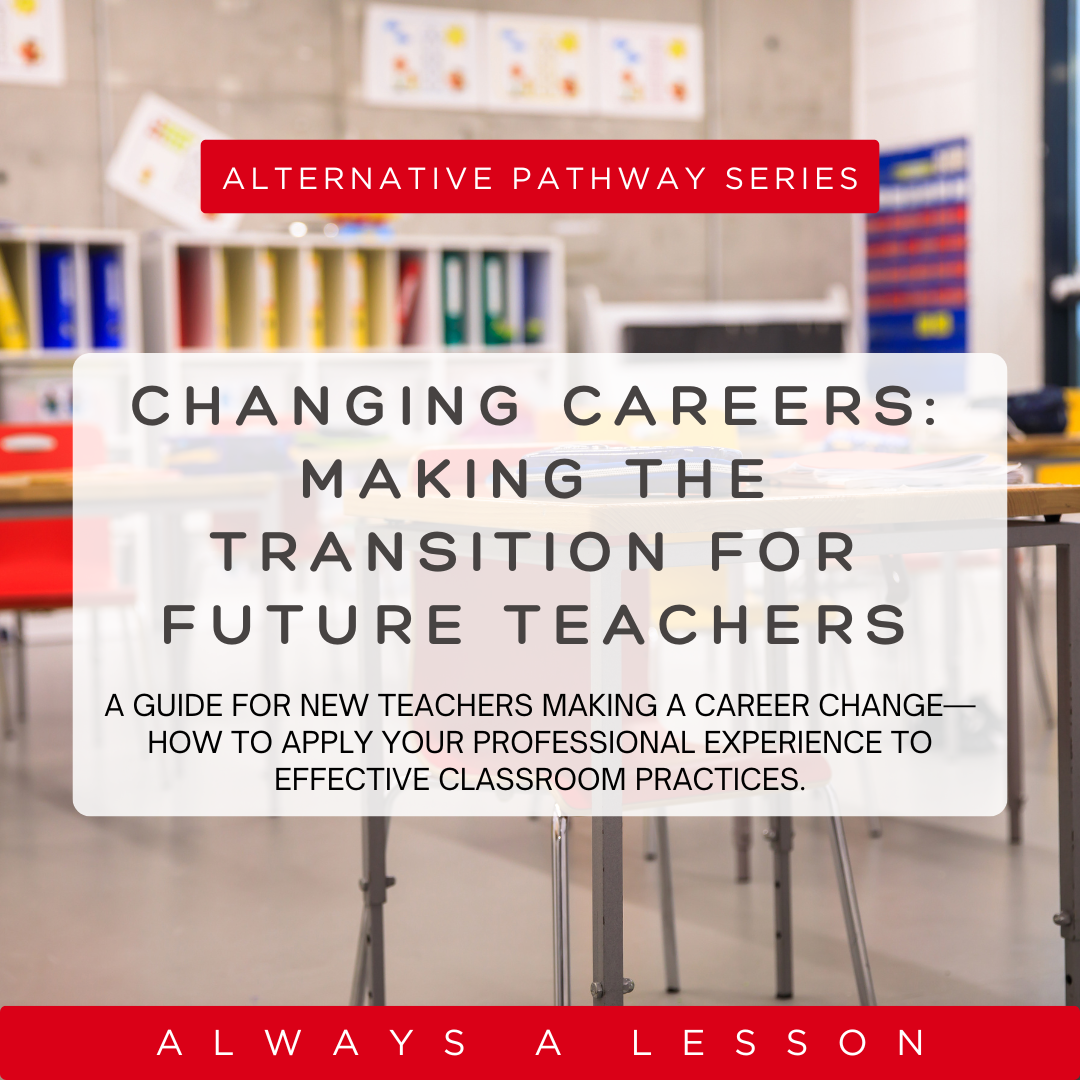
It is not uncommon for individuals to change jobs or careers in a lifetime- about 3-7 times on average. Many reasons contribute to this trend, including higher pay and benefits, career advancement, and job fulfillment. Specifically, when individuals want to transition into teaching from another career field, it can feel daunting. Although there are many new things to learn in new careers, there are equally many things already learned that can be applied in the new situation. This overlap is referred to as "transferrable skills."
This post will share 5 ways to transfer skills from a previous careers into effective teaching practices.
Identify Transferrable Skills
Recognize that corporate, service-industry, military, or nonprofit experience naturally translates into classroom strengths. To better exemplify what skills might transfer from the old setting into the new one, review the samples below:
- Project management is similar to the process of lesson planning in that both require organization, including setting goals, managing timelines, and allocating resources.
- Customer service relates to communicating effectively with parents because both require empathy, respect, and clear communication to build relationships.
- Team leadership mirrors managing a classroom in that both require setting clear expectations, establishing procedures and routines, motivating individuals towards common goals and fostering a positive environment.
- Data analysis is a very common task for teachers as they progress monitor students since both require collecting information to track growth over time in efforts to make more informed decisions.
Leverage Real World Experience
 Leverage your real world experience to bring lessons to life: use real world examples, stories and scenarios to make content more meaningful . As children grow in age, connecting to the material becomes even more important so a secondary school teacher would want to emphasize these in daily lessons. A benefit of having other career experience is being able to show students how learning connects to real careers (using your former career as an example). It is important to offer authentic problem solving tools from your field to demonstrate skills learned into school turn into superpowers at work.
Shift from Adult Focus to Kid Focus
One major difference when moving into education from another field is that who you manage will be very different. Working with adults is different than working with children. What works with adults (emails, autonomy, extended deadlines, etc.) does not translate well to the classroom. Kids need explicit modeling, step by step directions and constant reinforcement. However, a lot of alternatively licensed staff underestimate that the same leadership skills still apply- just scaled down, simplified and more structured.
Build an Instructional Toolbox
This task will have to be done quickly and intentionally as you are literally learning on the job. Do less and get really good at it. As you gain traction, you can diversify your teaching strategies and approaches.
-
- Keep routines and procedures for students simple and consistent
- Master 1-2 classroom management frameworks instead of trying to master a million
- 3 C's: content, community, and choice
- 5 R's: relationships, rights, rules, routines, and responsibilities
- Four Square: organization, discipline, instruction, and assessment.
- Study a few high yield instructional strategies
- Checks for understanding
- Modeling
- Guided practice
- Use district supports, mentor teachers, and PD intentionally
Embrace the Learning Curve
It’s normal to feel like an expert in your old field and like a mess as a beginning teacher. This isn’t starting over; it’s leveling up. The shift is monumental, but the transition is smoother when you ask questions early and often. The skills that made you successful in your old role (resilience, communication, problem solving, etc.) are exactly what make you a great teacher now. And we all know, teaching is the most noble of all professions!
Recommended Resources
The following resources will increase your preparedness for a role in education:
- Digital Downloads:
- Books:
Continue reading more in the Supporting Alternative Pathway Teachers series on the blog:
- Becoming A Teacher Without Student Teaching Experience
- Bridge the Instructional Gap: Must Know Pedagogy for Non Traditional Teachers
GO BE GREAT!

About the author, Gretchen
I am a teacher trainer and coach. Working elbow to elbow with teachers and teacher leaders to ensure instructional proficiency and student achievement soar lights me up. We have a real need in our nation for strong educators to remain in the field. My blog, book, podcast, courses and instructional materials are geared towards empowering teachers (and those that lead them) to receive the support needed to grow and thrive today, tomorrow and always.